
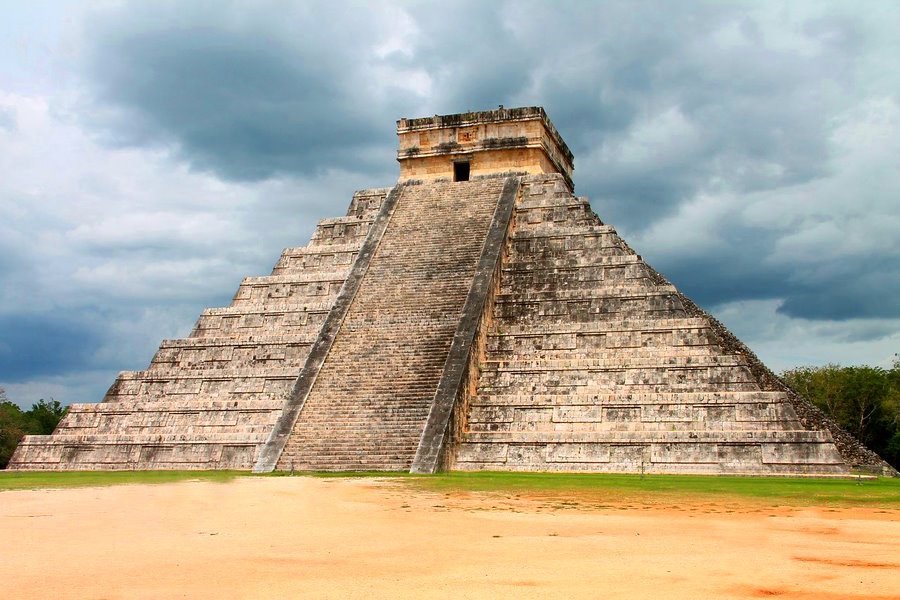
Throughout history, countless civilizations have risen and fallen, leaving few traces of their existence. Despite the loss of these cultures, the mystery surrounding them lives on in our minds. From ancient Egypt to the Mayan civilization, much of pre-history remains shrouded in mystery. What caused their destruction? How did they rise and fall so quickly? And why was their legacy so easily erased? In this blog article, we take a look at some of the most famous destroyed civilizations in pre-history and explore the mysteries that still surround them today.
Theories about how ancient civilisations were destroyed
There are many theories as to how ancient civilizations were destroyed. Some believe that natural disasters such as earthquakes, floods and volcanic eruptions caused the end of these cultures. Others believe that changes in the climate or environment were to blame. Still others believe that societies simply collapsed under the weight of their own problems.
One of the most popular theories is that an asteroid or comet hit the Earth 65 million years ago, wiping out the dinosaurs and many other species. Some scientists believe that a similar event may have caused the disappearance of Neanderthals around 40,000 years ago. It has been suggested that a comet or meteor struck the Earth in 10,950 BC, causing widespread destruction and leading to the collapse of civilisations such as the Maya and Indus Valley cultures.
Whatever the cause, it is clear that many ancient civilizations came to a sudden and violent end. In some cases there is no clear explanation of what happened. In others, there are only theories and speculation. But one thing is certain: the mystery of these lost cultures continues to fascinate us today.
Pre-dated civilizations that have been discovered
The first step in trying to understand the mystery of destroyed civilizations is to look at pre-dated civilizations that have been discovered. These are cultures whose existence has been found through archaeological digs, but which were not known about beforehand. Many of these cultures were incredibly advanced, with well-developed systems of government, art, and architecture. So how could such sophisticated cultures have simply disappeared?
There are a number of possible explanations for this. One is that these cultures were simply overwhelmed by natural disasters. This is certainly possible, as even today’s societies can be brought to their knees by hurricanes, earthquakes, or other catastrophes. another possibility is that they were slowly eroded away by environmental changes. Over time, changes in climate or the availability of resources can make it impossible for a civilization to survive.
Another possibility is that these cultures were destroyed by more powerful ones. This was certainly the case with the Maya, who were conquered by the Spanish in the 16th century. In some cases, the conquerors may not have even realized that they were destroying an entire civilization; they may have simply seen them as primitive people who needed to be converted to Christianity or forced into labor.
Whatever the reason for their demise, these lost civilizations teach us that even the most advanced societies are vulnerable to extinction. It is important to remember this when considering our own place in history and what we might do to prevent our own civilization from disappearing one day.
The importance of understanding these civilizations
When one thinks of ancient civilizations, the first thing that comes to mind is likely the Egyptian pyramids or the Roman Colosseum. However, there are many other civilizations that lived long before these famous examples that were just as influential in their own time. Unfortunately, since these civilizations predate written history, we have a very limited understanding of them. This is why it is so important for archaeologists and historians to study any remnants of these cultures in order to learn more about them.
Some of the most intriguing mysteries surrounding lost civilizations involve how they disappeared. In many cases, it is still unclear why an entire civilization would vanish without a trace. Did they succumb to natural disasters? Or were they conquered by another culture? Without further evidence, it is difficult to say for sure. However, studying what remains of these cultures can give us clues about what might have happened to them.
In some cases, modern civilization can learn from the mistakes of these lost cultures. For example, the Mayans are believed to have perished due partially to deforestation; by studying their culture, we can be better prepared to avoid making similar mistakes in the future. Additionally, understanding these ancient cultures helps us appreciate the diversity and richness of human history. Each civilization has its own unique story that contributes to our shared understanding of the human experience.
How can we prevent the destruction of our civilization?
We can prevent the destruction of our civilization by understanding the patterns of previous civilizations. We can also learn from their mistakes and avoid repeating them. Additionally, we can invest in safeguards against natural disasters, build resilient infrastructure, and promote social cohesion.
What can we learn from these ancient civilizations?
We can learn a great deal about ancient civilizations from the ruins that they have left behind. By studying the remains of these cultures, we can gain insights into their way of life, their values, and their belief systems. Additionally, we can learn about the environmental conditions that existed during different periods in history and how they may have influenced the development of these civilizations.